Cased hole analysis tool (chat)
Through-Casing Formation Evaluation – Pinpoint Gas Sources, Fluid Types, and Reservoir Insights
While used extensively as a powerful diagnostic dataset for Surface Casing Vent Flow (SCVF) and Gas Migration (GM) source identification, Reliance Oilfield Services' Cased Hole Analysis Tool (CHAT ) delivers calibrated through-casing formation evaluation that benefits a wide range of applications, from identifying water/oil/gas contacts within a formation, locating bypassed pay, monitoring reservoir depletion, grading Coal Bed Methane (CBM), and supporting problem well diagnostics.
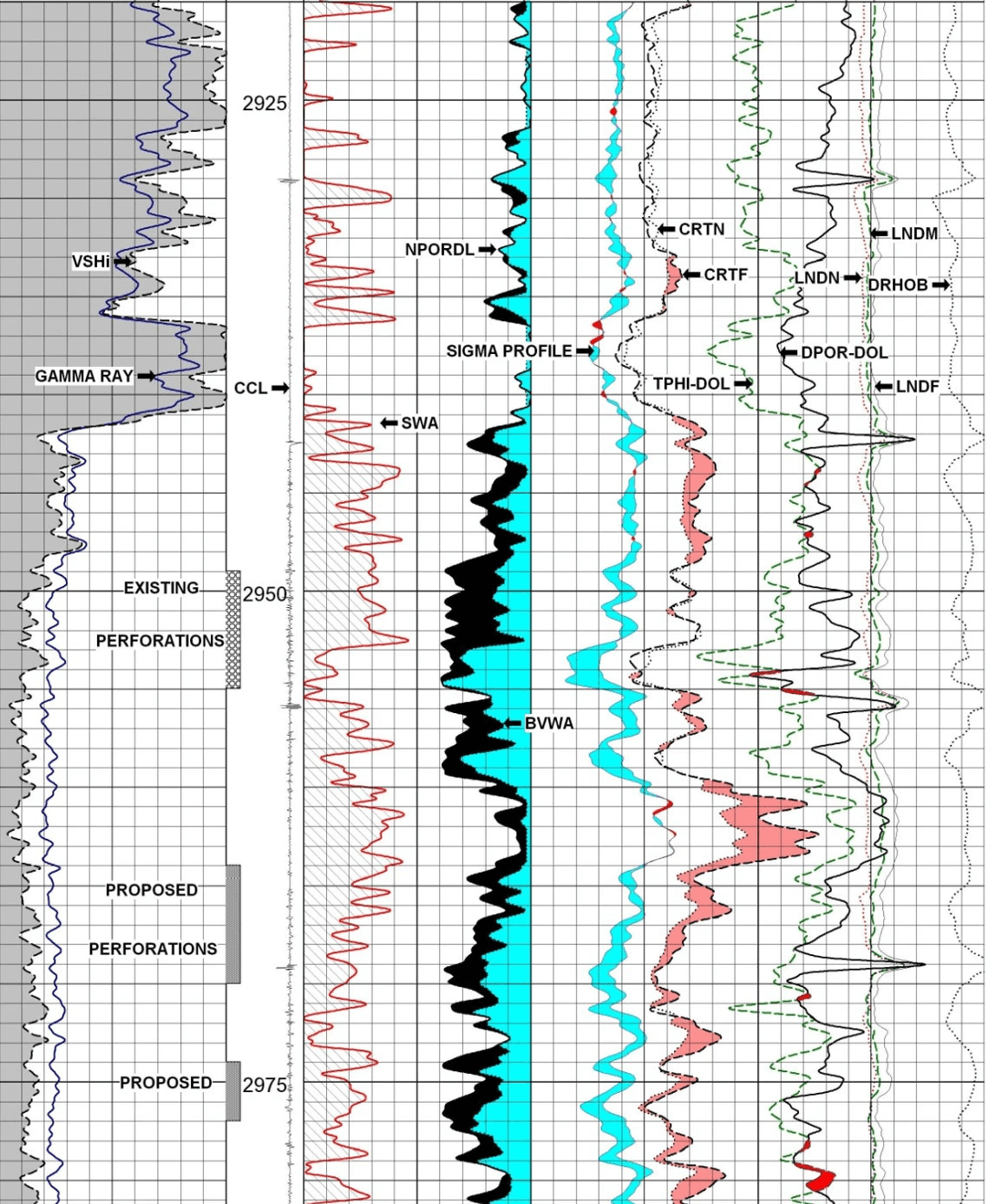
CHAT tools combine dual-energy neutron (thermal/epithermal) measurements with formation density to provide reliable porosity, fluid identification, and annular/formation gas location, often revealing gas contributions missed by open-hole logging due to invasion effects. When integrated with our proprietary Casing Vibration Tool (CVT), Noise Temperature Logging, Radial Bond Logs, and other complementary datasets, CHAT tools enables enhanced multi-tool visualization and interpretation, merging acoustic noise signatures, thermal anomalies, cement bond quality, and formation evaluation into a single, comprehensive log presentation for faster, more confident decision-making.
This integrated approach is supported by our proprietary in-house analysis software, and delivers richer, cross-validated insights (e.g. correlating CHAT gas crossovers with CVT vibration events and noise/temperature anomalies) to build a complete diagnostic story for remediation, zonal isolation, cement squeeze planning, and compliant abandonments under Alberta Directive 020 (Well Abandonment), Directive 087 (Well Logging), Saskatchewan PNG015, and BC guidelines.
How CHAT Tool Logging Works:
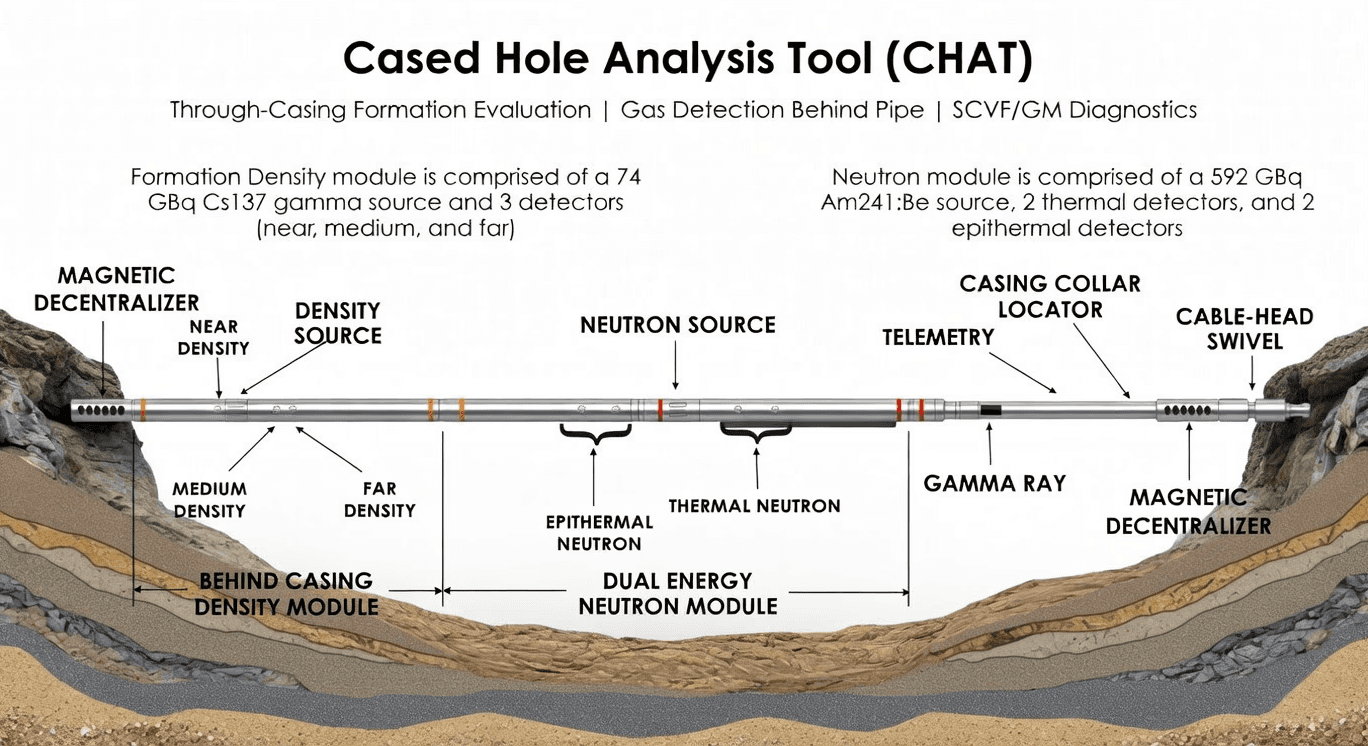
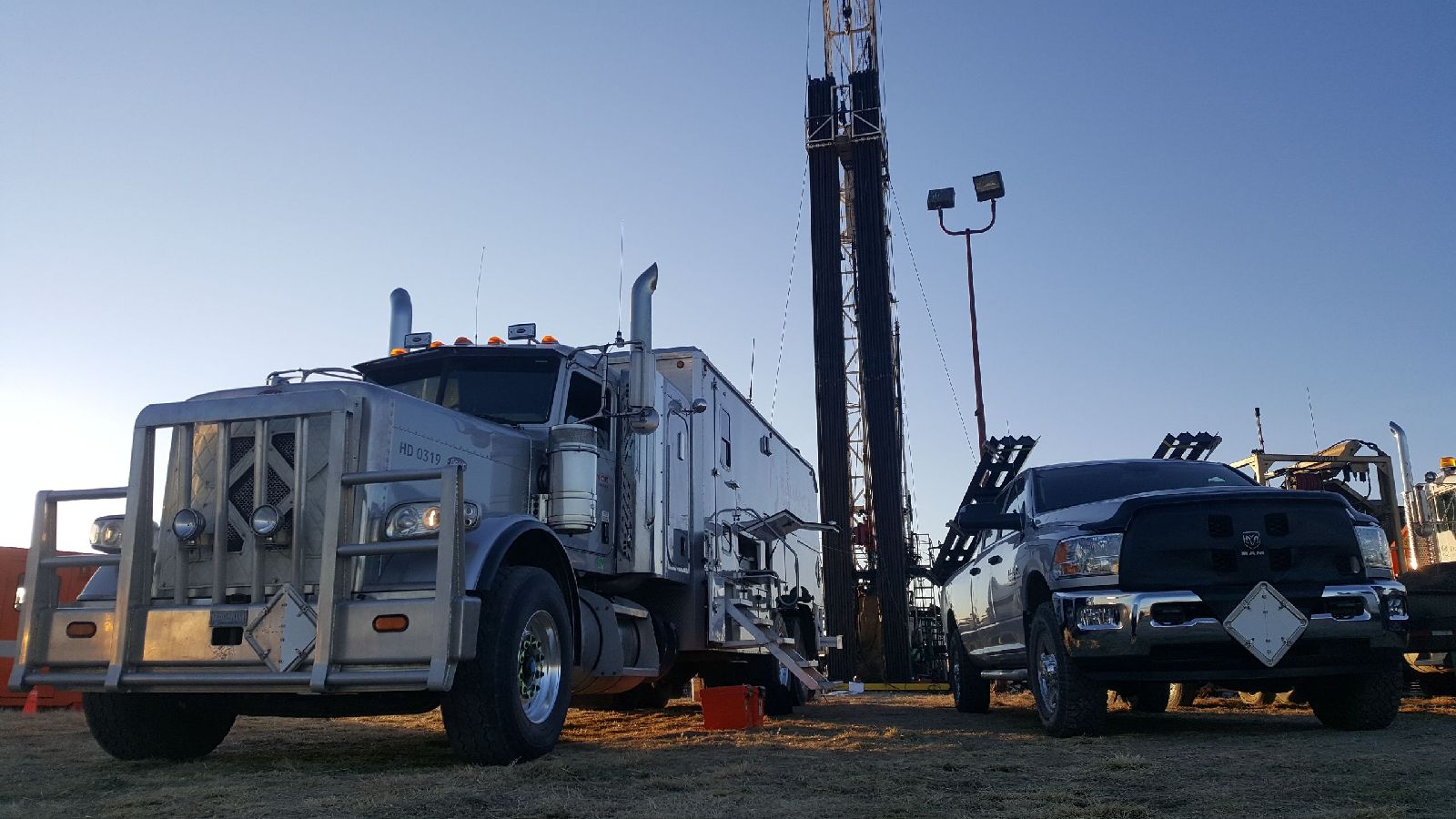
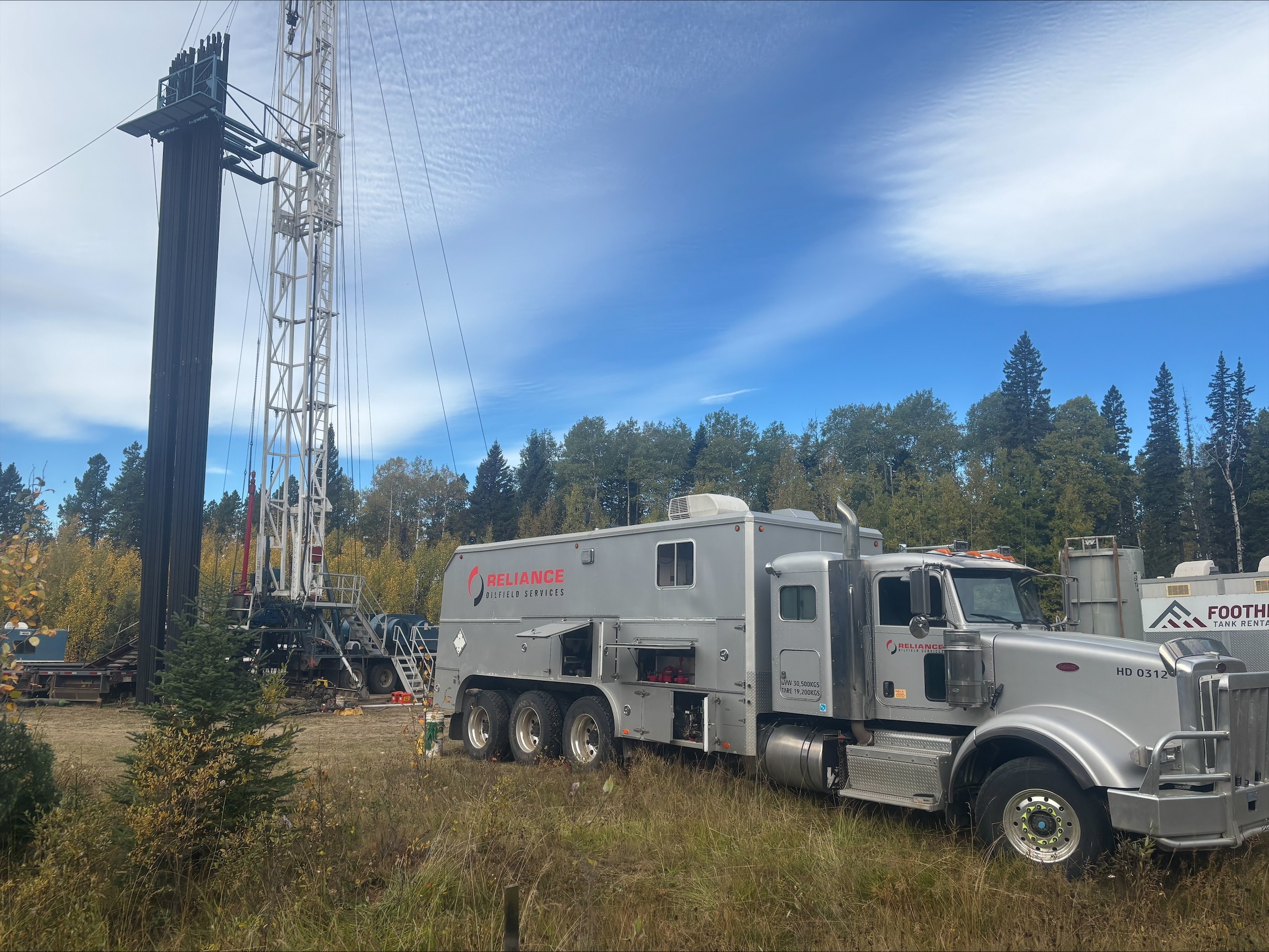
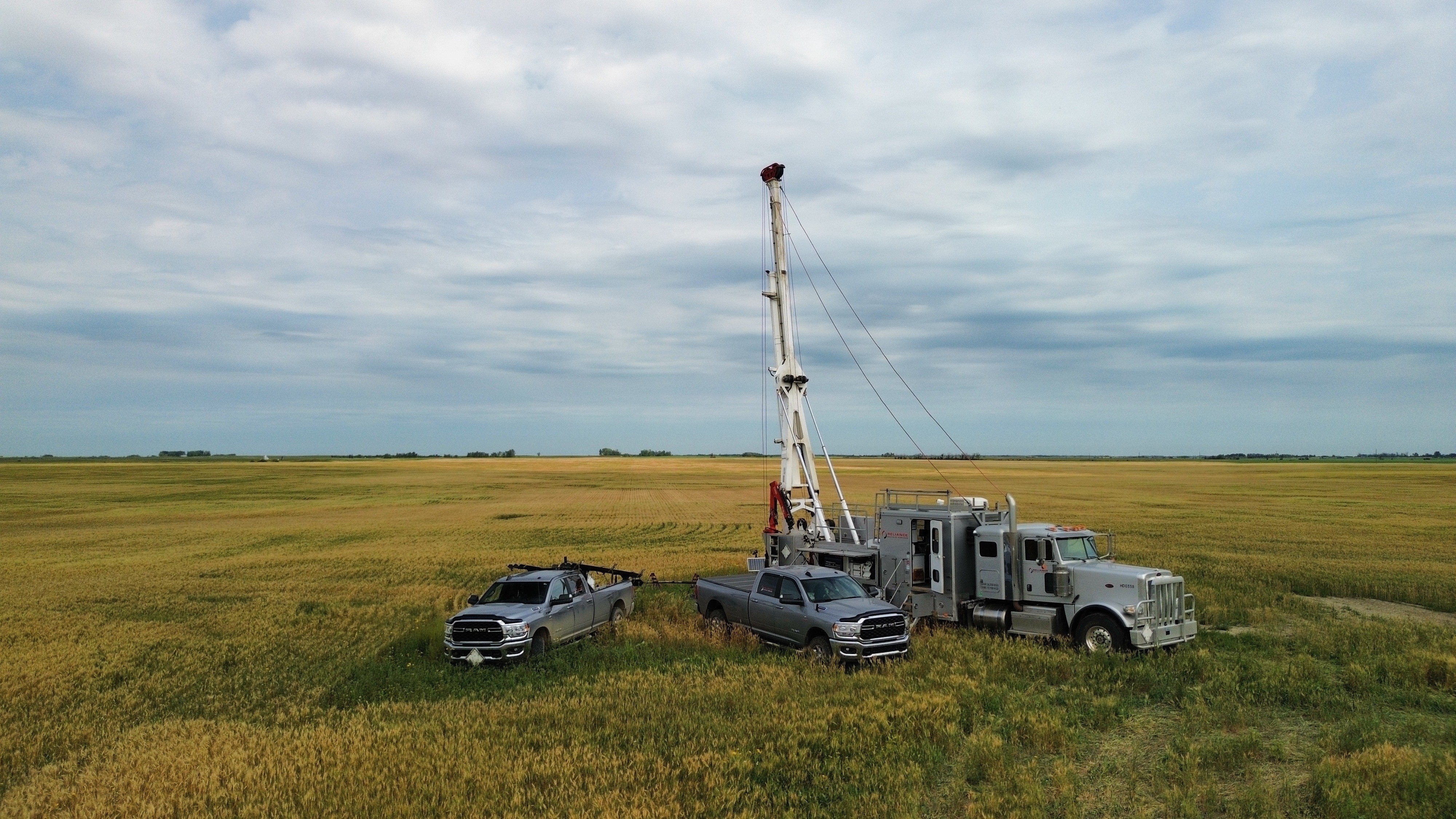
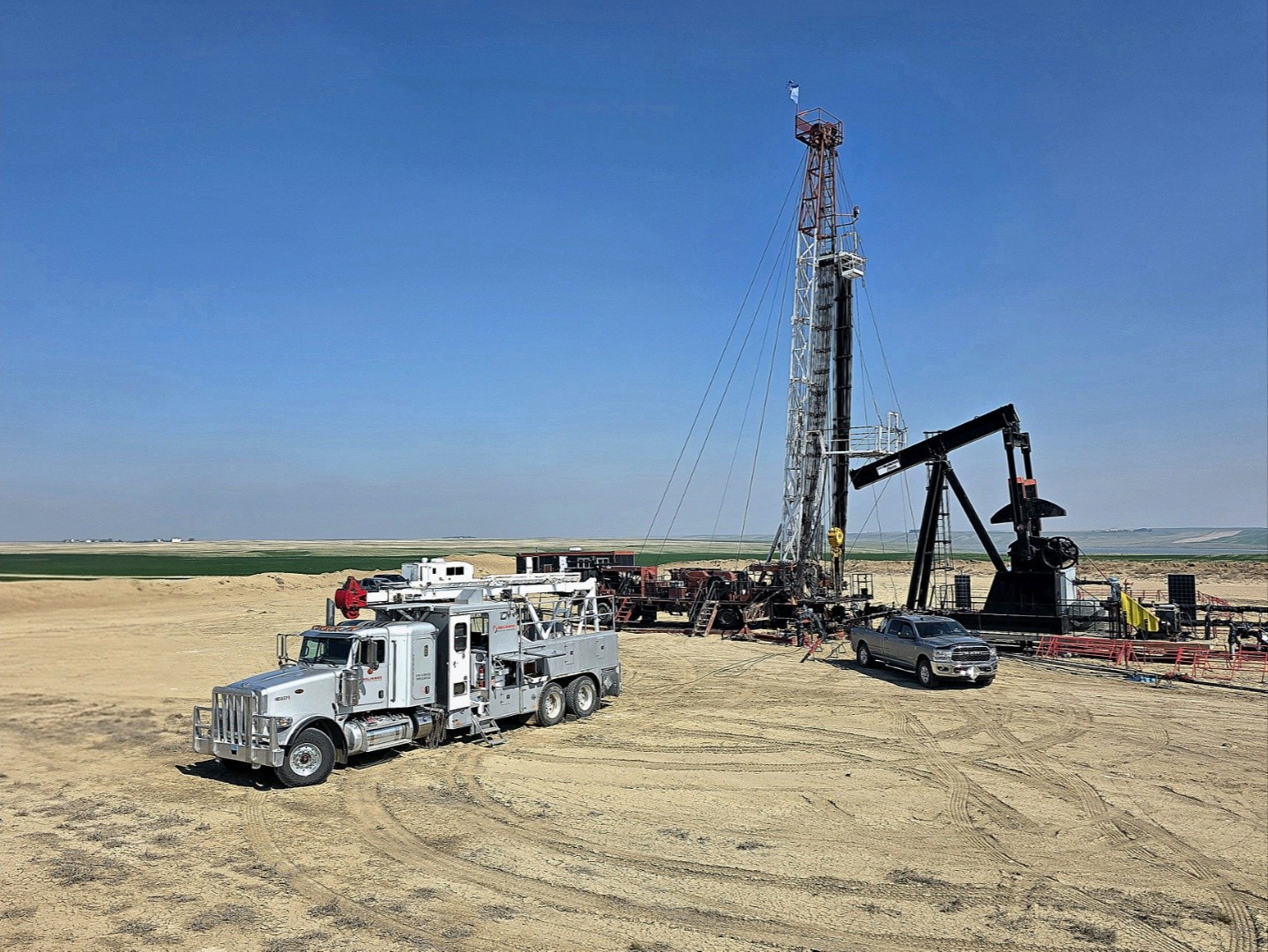
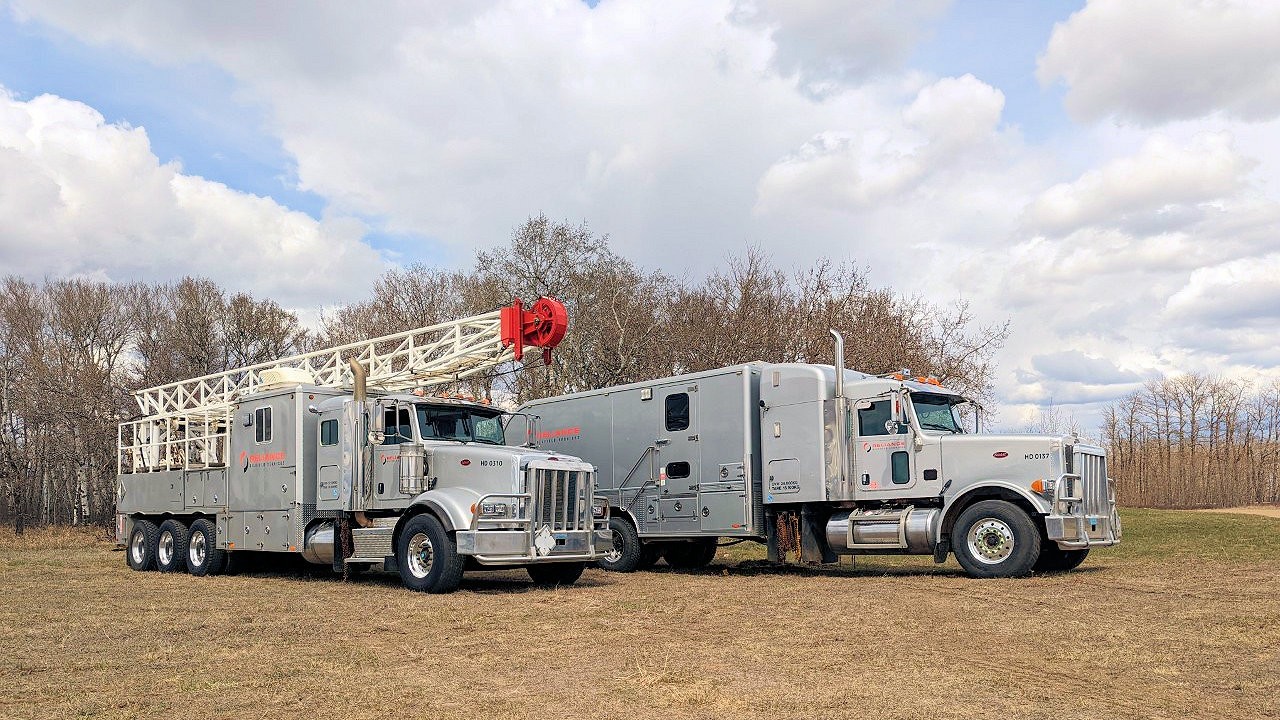
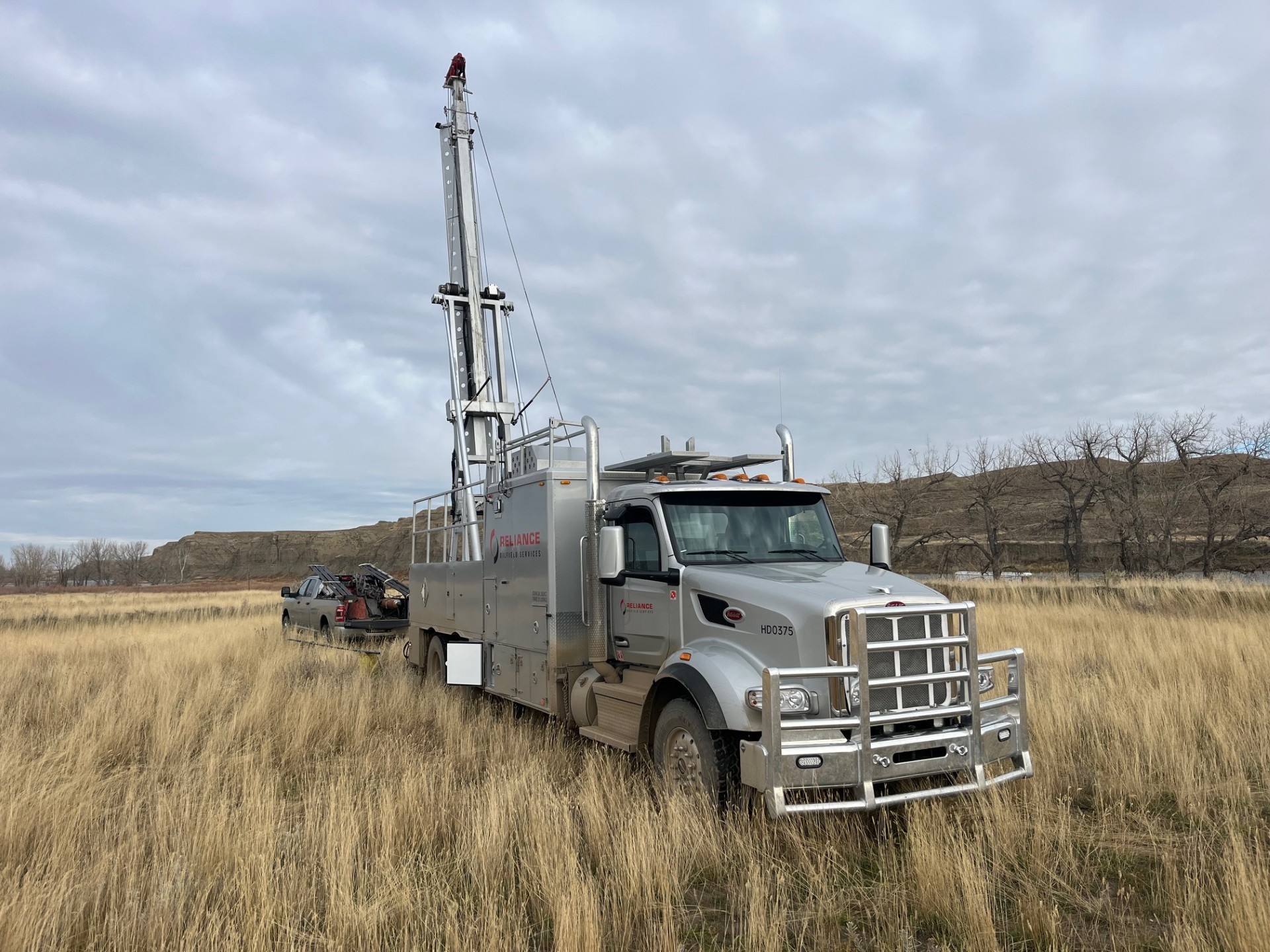
Wireline Deployment - Slim 43 mm (1-11/16") or 83 mm (3-1/4") tools conveyed via electric line, slickline, heli-portable units (for remote sites), coil tubing (E-coil or memory) or drill pipe.
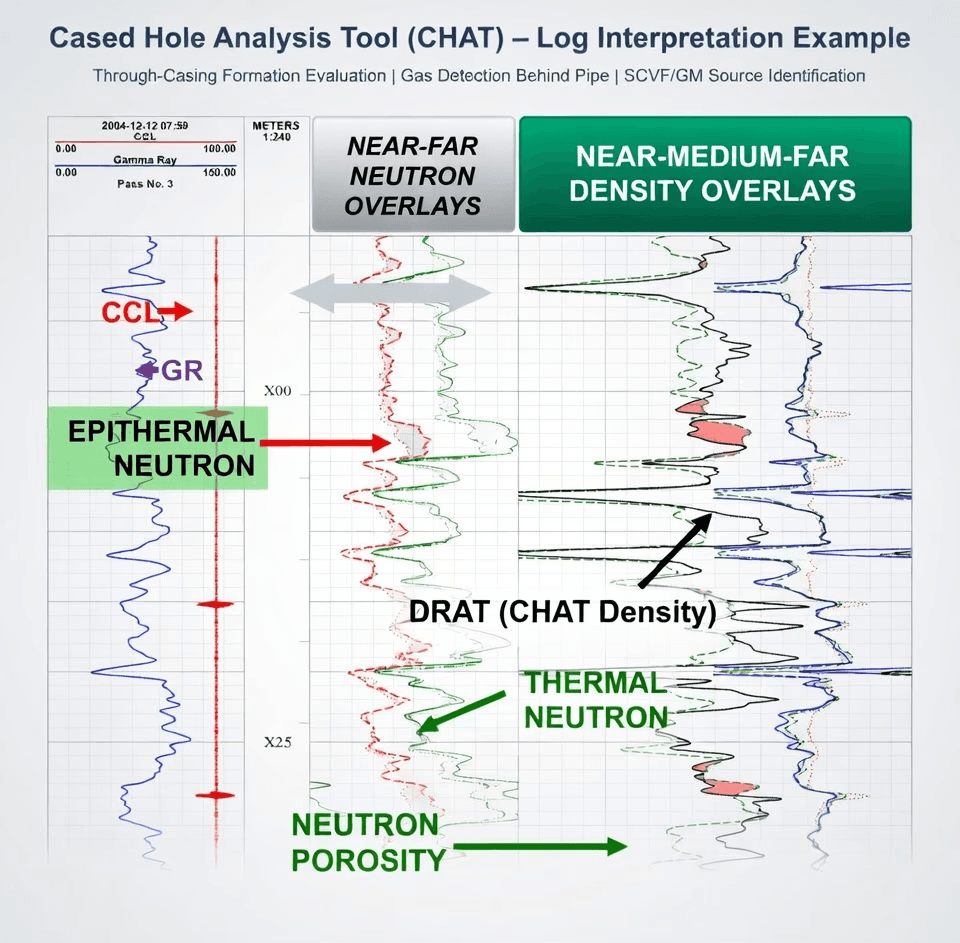
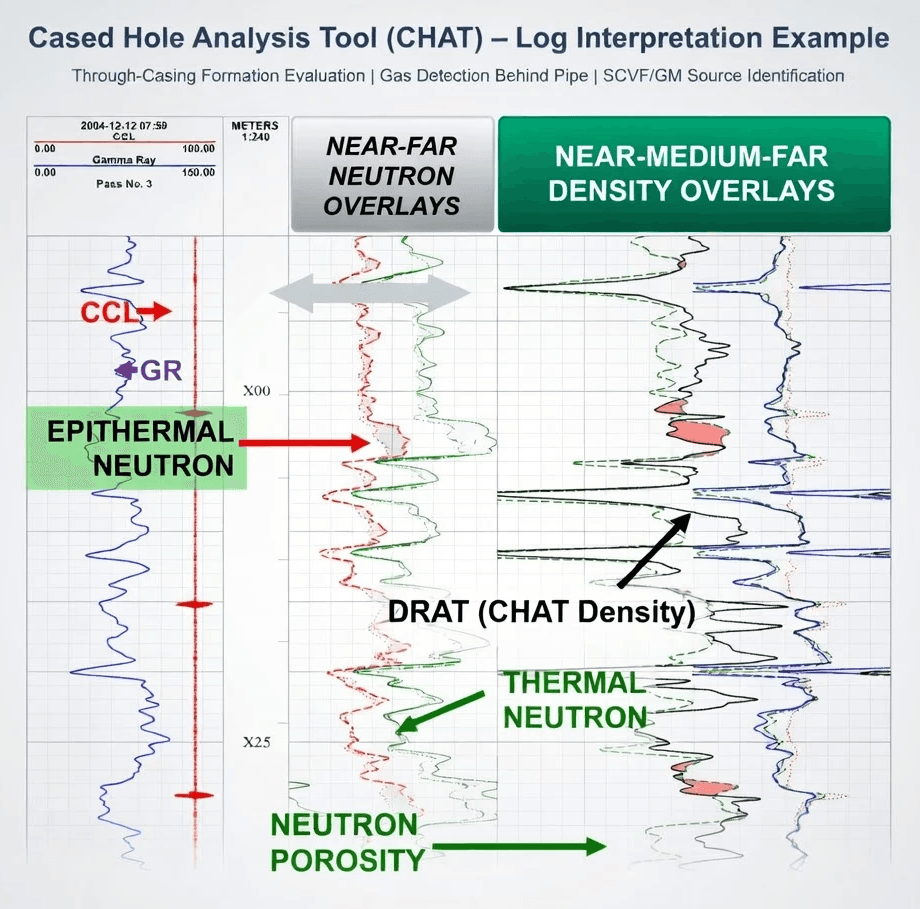
Dual Neutron Detection — Thermal and epithermal neutron counts capture hydrogen index for porosity calibration, sensitive to salinity and gas effects.
Formation Density Measurement — Provides bulk/relative density to differentiate gas zones, low-porosity intervals, and annular gas—enabling clear neutron-density crossovers (gas effects shaded).
Data Analysis — Processed for apparent water saturation (Swa), bulk volume water, calibrated porosity, gas effects (shaded crossovers), and cement/eccentricity insights. Combine CHAT data with CVT vibration waveforms, noise frequency spectra, temperature anomalies, and radial cement bond maps for enhanced multi-parameter visualization, improved source correlation, and more reliable interpretation.
Inquire about CHAT TOOL
TOOL SPECIFICATIONS
Diameter
1 – 1/16” (43mm)
3 – 1/4” (83mm)
Pressure Rating
103 MPa (15,000 psi)
103 MPa (15,000 psi)
Temperature Rating
150°C (300°F)
150°C (300°F)
H₂S/CO₂ Rated
Yes
Yes
Modes:
Surface Readout (SRO) / Memory
Surface Readout (SRO) / Memory
Key Benefits & Applications
SCVF/GM source identification – Pinpoints formation and annular gas contributing to vent flows and migration
Formation evaluation identifying water/oil/gas contacts
Identifies bypassed pay missed by open-hole logging due to invasion
Primary/secondary porosity measurement and reservoir potential evaluation
Reservoir depletion monitoring and fluid contact tracking
Coal Bed Methane (CBM) identification and grading
Horizontal wellbore evaluation
Problem well diagnostics (e.g., water coning, dry wellbore conditions)
Annular fluid identification
Full memory applications (slickline, coil, drill pipe conveyance)
Rigless efficiency reduces costs, emissions, and downtime ideal for Plug and Abandonment (P&A) campaigns and high-volume inventories
Verifiable, high-quality data accelerates regulatory approvals and strengthens LMR/LLR ratings
Enhanced interpretation when merged with CVT, Noise Temperature, and Radial Bond data for integrated log displays and cross-tool validation
CHAT Outputs
Calibrated thermal/epithermal neutron porosity
Gamma ray and CCL
Apparent water saturation (Swa) and bulk volume water
Tri-Sensor Formation density for gas/oil/water differentiation
Neutron-density crossover showing gas effects (shaded for SCVF/GM sources)
Annular gas identification and nuisance vs. productive source distinction
Inquire about CHAT TOOL